TE ARA WENEREI | Understanding the Pathway

Historical grievances have travelled a long road — and understanding where we are today often means understanding what came before.

Te Ara Wenerei follows that pathway. We break down the processes, key stages and concepts that sit behind progressing historical grievances, and explore how the different pieces fit together.

The pathway can be complex. The kōrero doesn’t have to be.

808999984 1981497933110494 4317712563928151697 n

It Starts With the People

Last week we talked about the who, what and how that sit behind giving someone permission to carry out mahi on behalf of others.

This week, we dig a little deeper into the WHO.

And the first who isn’t the person being given the job.

It’s the people the mahi belongs to.

When historical grievances are being progressed, those grievances come from somewhere. They belong to people, whānau and hapū with histories, whenua, tūpuna and claims that existed long before anyone started talking about mandates or negotiations.

Read more…

So before anyone can be given permission to act, there needs to be clarity about who they are being asked to act for.

In Whangaroa, hapū matter in that conversation.

A hapū has its own identity, its own whakapapa and its own historical experiences. Being part of a wider Whangaroa journey doesn’t make those things disappear.

Coming together doesn’t mean everyone becomes the same.

The collective kaupapa and the identity of individual hapū are not the same thing.

When historical grievances are progressed collectively, that means being clear about which hapū and claims are part of that collective journey.

Only then does the second WHO come into the picture:

Who will be trusted to carry that mahi?

Those people don’t become the owners of the grievances or the authority behind them. They have been given a job to do on behalf of others.

So there are two very different sides to the WHO.

The people the mahi belongs to.

and

The people trusted to carry the mahi.

Understanding the difference between the two is important.

Because before we talk about structures, titles or who might sit around a table, we first need to understand where the authority comes from.

It starts with the people.

811534363 1975170040409950 7431443455232744484 n

When We Entrust Someone With the Mahi

When we entrust someone with important mahi, there’s usually more to it than saying, “Yep, you can do it.”

We know who the mahi is for.

We know who has been trusted to carry it.

We understand what we’ve asked them to do.

We have an understanding of how they’ll do it.

And importantly, they remain answerable to the people who entrusted them.

These are familiar ideas.

Read more…

Last week, we looked at some familiar examples from around the marae — the kaikaranga, the kaikōrero, and even the kōtiro asked to pour the kapu tī.

Each had been given a job to do on behalf of others. That helped us make sense of the word mandate — the permission given to someone to act on behalf of others for an agreed purpose.

But giving someone the job is only part of it. We also need to be clear about who the mahi is for, what we’ve asked them to do, and how that mahi will be carried out.

This week, we’re adding another layer.

When that permission involves something as important as progressing historical grievances, it needs to be clear what people are being asked to entrust.

There are a few important parts.

THE PEOPLE

It starts with the people whose historical grievances are being progressed. It needs to be clear who the mahi is for and whose authority is being sought.

THOSE ENTRUSTED WITH THE MAHI

It needs to be clear who has been trusted to carry the mahi on behalf of the people.

Being entrusted with the mahi doesn’t mean owning the authority. That authority comes from the people who gave it.

THE MAHI

There needs to be a clear understanding of what those entrusted are being asked to do.

The permission is for a particular purpose. It doesn’t automatically give someone permission to make every decision that may come later.

HOW THE MAHI IS CARRIED OUT

People should be able to understand how the mahi will be carried out, how decisions are made and how information is shared.

ANSWERABLE TO THE PEOPLE

Being trusted with the mahi comes with responsibility.

Those entrusted remain answerable to the people who gave them that authority. People need ways to stay informed, participate and hold those carrying the mahi to account.

Put these pieces together and we begin to see what sits behind giving a mandate.

When we understand who, what and how, the bigger picture starts to become clearer.

And that matters — because before authority is given, our people should understand what they are being asked to entrust.

There’s more to this journey than one word or one decision. Each Wednesday, we’re breaking it down a little further — so keep following Te Ara Wenerei as we put the pieces together.

He ara whakamua — one step at a time.

797811708 1968041324456155 6821229790138255588 n

A Familiar Idea with an Unfamiliar Name

Last week, we followed the journey from the Waitangi Tribunal hearings to the point where claimants and hapū consider whether, and how, their historical grievances might be progressed.

This week, we introduce a word that can sound unfamiliar in this journey:

Mandate.

It might sound formal, but the idea behind it isn’t new to us.

Think about a pōwhiri on the marae.

Our kaikaranga has been given the authority to stand and call on behalf of the hau kāinga.

Read more…

Our kaikōrero may be given the authority to stand and speak on behalf of the people.

Someone in the wharekai has been trusted to organise the kai.

Even the kōtiro who has been asked to pour the kapu tī has been given a job to do on behalf of others.

Each has been entrusted with something.

And importantly, the authority they have been given relates to the job they have been asked to do.

The kōtiro pouring the tea hasn’t suddenly been given authority to run the marae.

The kaikōrero doesn’t automatically have the authority to make every decision for the hapū.

They have been entrusted with a particular role, for a particular purpose.

That is a simple way of understanding a mandate.

A mandate is permission or authority given by people to someone else to act on their behalf for an agreed purpose.

When we bring that idea into the Whangaroa mandate journey, the principle is much the same — although the responsibility is much bigger.

The important questions become:

• Who is giving the authority?

• Who are they giving it to?

• What are they being authorised to do?

• How will they remain accountable to the people who gave it?

And there is one other distinction that is important from the beginning:

A mandate is not a settlement.

It is authority to take a particular step on behalf of the people.

Over the coming Wednesdays, we will unpack what that means for Whangaroa.

Understanding the Journey

Understanding the journey, one step at a time.

Today we bring Te Ara Wenerei—a series that shares straight forward information about the Whangaroa mandate journey.

Over the coming weeks, we will look at where this part of the journey began, how Whangaroa arrived at this point, what a mandate is, what it is not, and what happens next.

Today we take up the journey with the Waitangi Tribunal hearings.

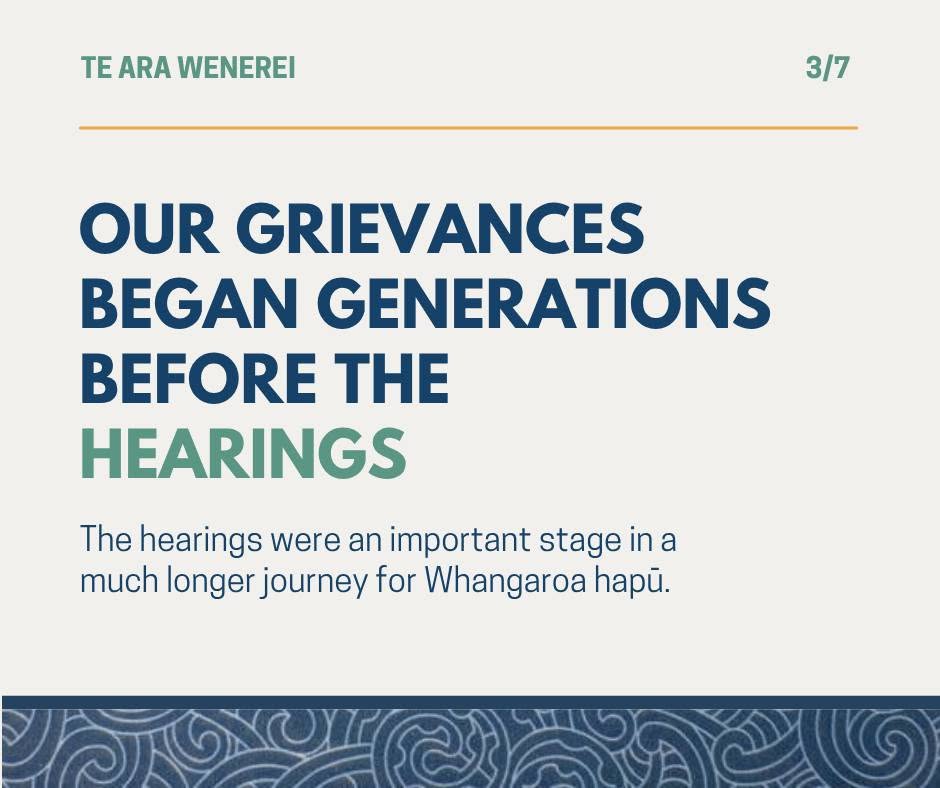
The grievances of Whangaroa hapū began generations before the Waitangi Tribunal hearings.

Read more…
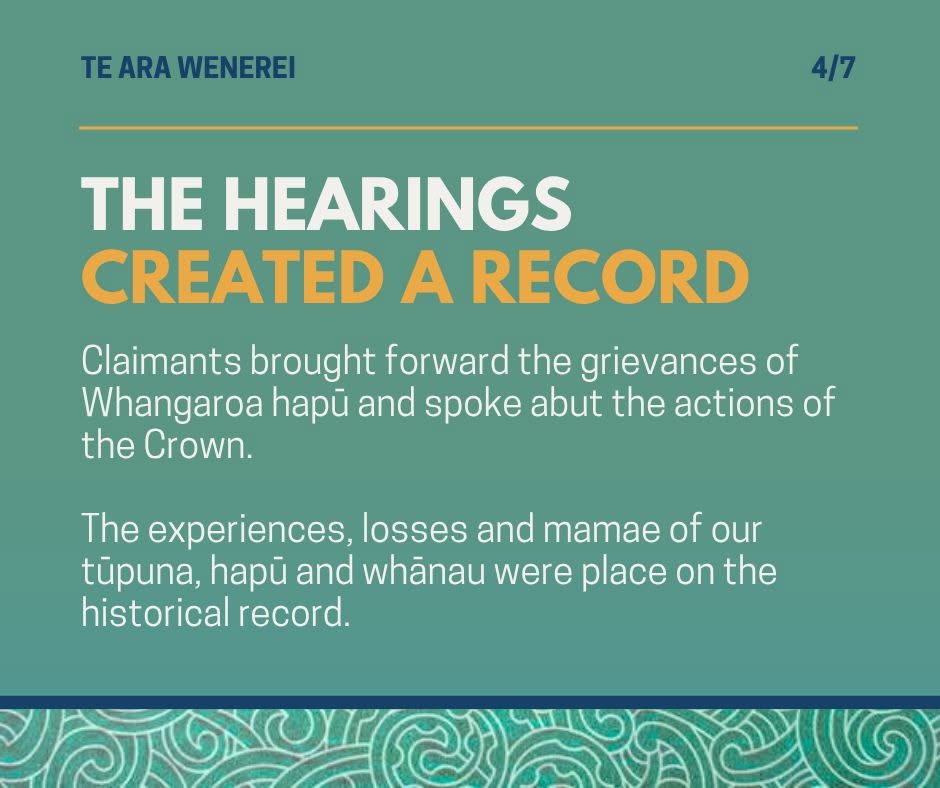
The hearings gave claimants the opportunity to bring those grievances forward—to speak about the actions of the Crown and place the experiences, losses and mamae of our tūpuna, hapū and whānau on the historical record.

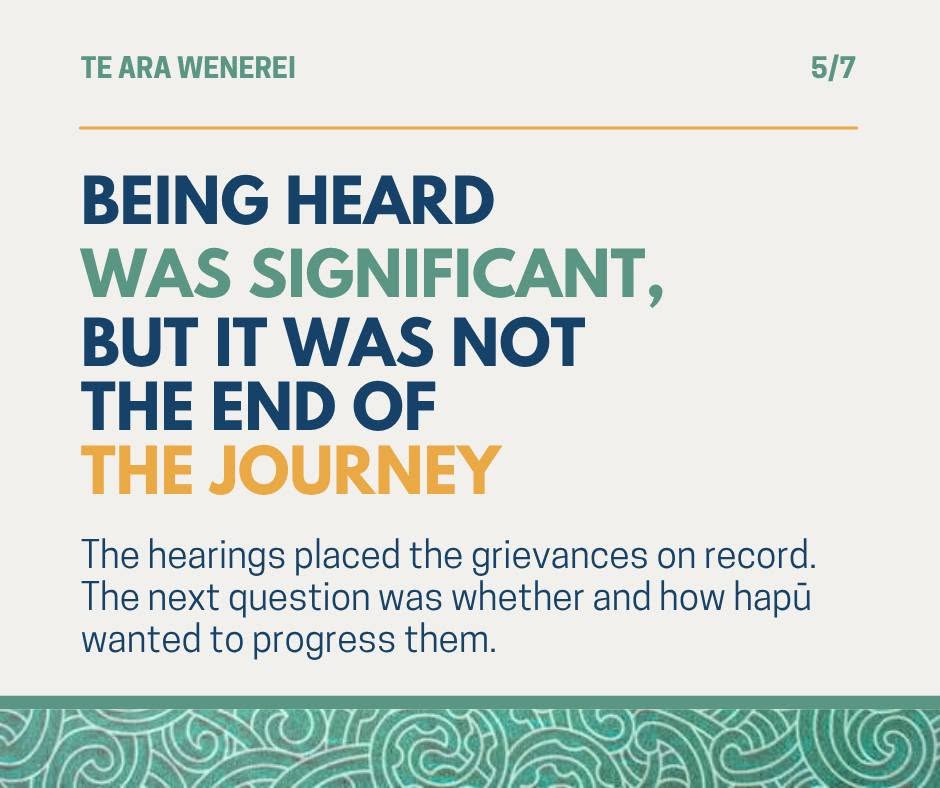
Being heard was a significant step, but it was not the end of the journey.

The hearings placed the grievances on record. The next question was whether and how hapū wanted to progress these further.

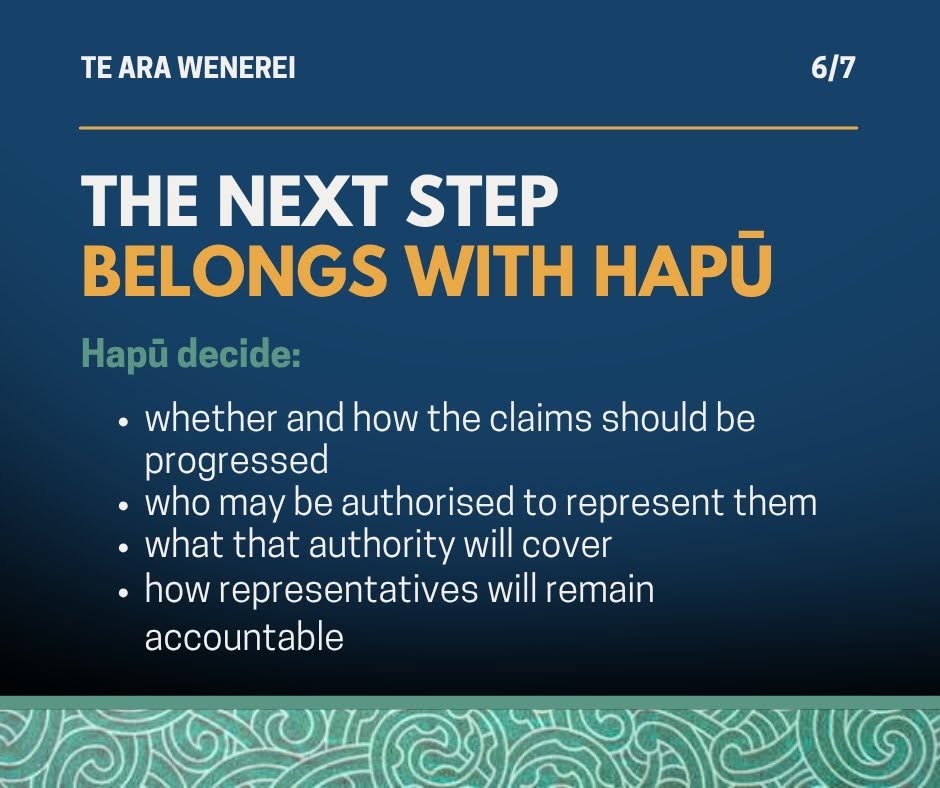
The next step belongs with hapū.

Hapū decide:

• whether and how the claims should be progressed

• who may be authorised to represent them

• what that authority will cover

• how representatives will remain accountable

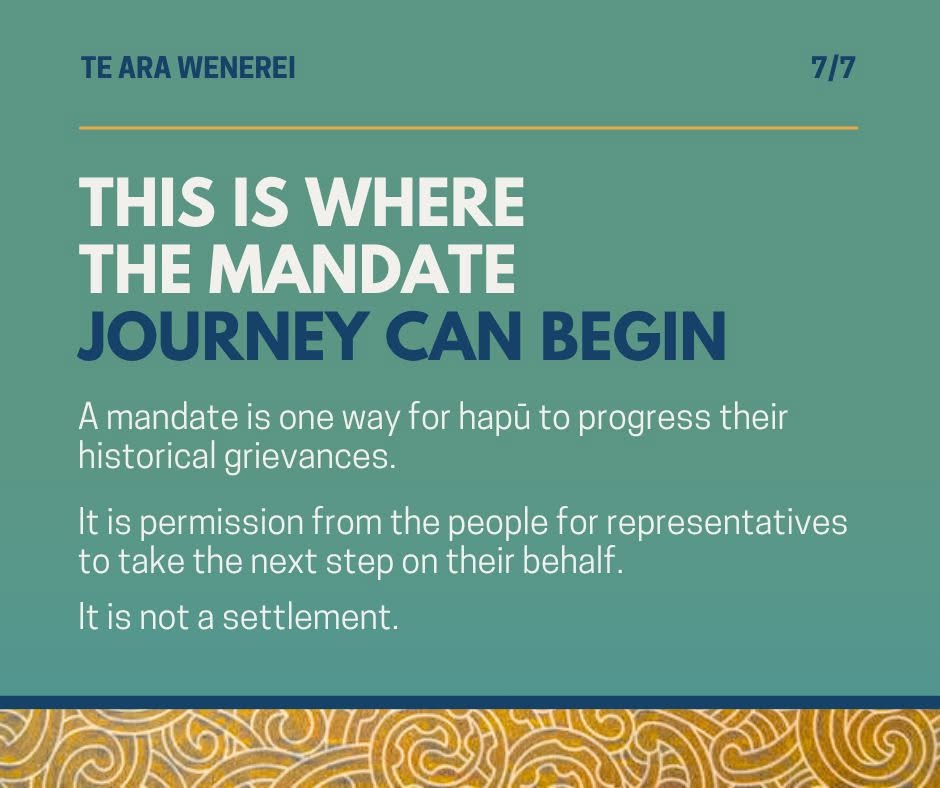
This is where the mandate journey can begin.

A mandate is one way for hapū to progress their historical grievances. It is permission from the people for representatives to take the next step on their behalf.

It is not a settlement.

790458441 1961242211802733 1872873785691424728 n
790506488 1961242208469400 4143114699973734779 n
789426416 1961242288469392 5369901718416119986 n
792159157 1961242291802725 7926603740511455615 n
792198795 1961242335136054 2704851222329702982 n
790256743 1961242415136046 6216183212690599639 n