

ŌU PĀTAI PARAIRE | Your Questions, Explained
Questions are part of understanding any process — and sometimes the simplest pātai can open the door to a much bigger kōrero.
Ōu Pātai Paraire takes some of the questions that arise around Whangaroa’s historical claims and explores the information behind them in a clear and straightforward way.
One pātai at a time.
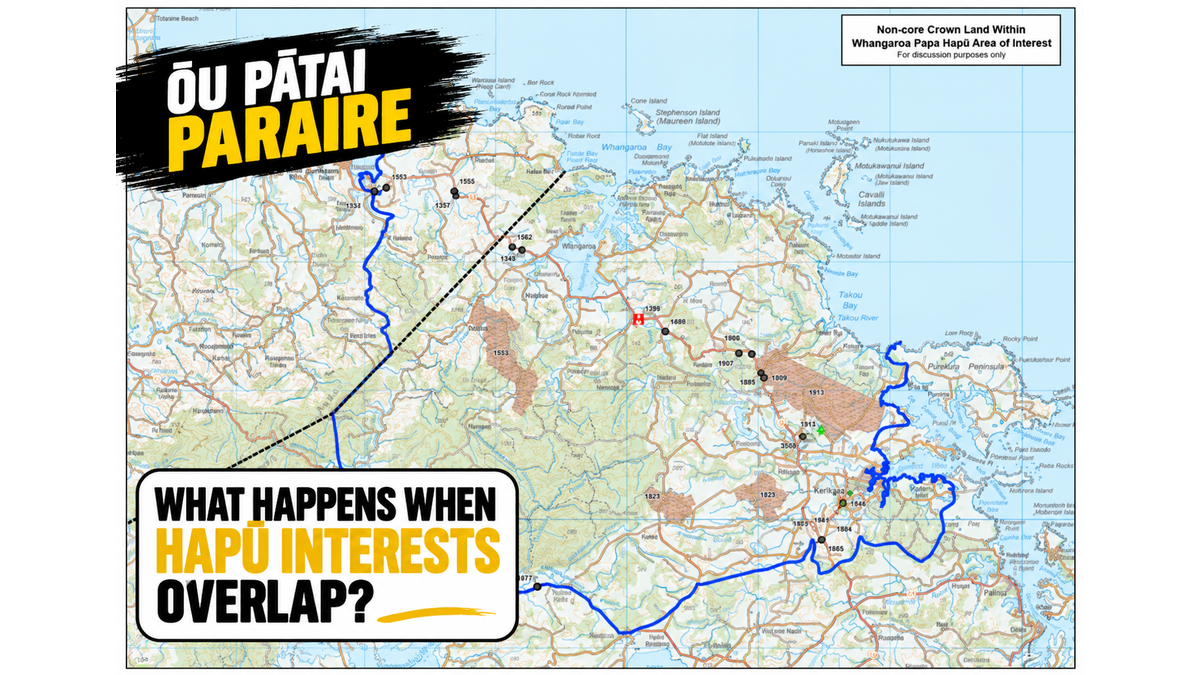
What Happens When Hapū Interests Overlap?
Whenua does not always sit neatly within the story of just one hapū.
Through whakapapa, occupation, ahi kā, customary use and relationships built over generations, more than one hapū can have an interest or connection to the same whenua, awa, moana or other wāhi.
When those interests meet in the same place, they are often described as overlapping interests.
But an overlap does not necessarily mean the interests are the same.
One hapū may have a long history of occupation in a place. Another may have whakapapa connections, customary use, wāhi tapu or other historical associations there.
Read more…
What Does “Full and Final” Mean?
You may have heard the words “full and final” when people talk about Treaty settlements.
It is a phrase that can sound pretty absolute.
So what is actually being made full and final?
In a Treaty settlement, “full and final” refers to the historical claims that are defined and covered by that settlement.
A settlement defines both the claimant group and the historical claims being settled. Historical claims generally concern Crown acts or omissions before 21 September 1992, although the particular Deed of Settlement and settlement legislation set out exactly what is covered.
Read more…
What is Resumption?
You may have heard the word resumption when people talk about historical Treaty claims.
So what does it mean?
Resumption is a particular remedy that sits within the jurisdiction of the Waitangi Tribunal and relates specifically to land.
When the Tribunal finds a claim well-founded, it can recommend remedies to address the harm caused by a Treaty breach.
For resumption, the Tribunal has special powers that apply to particular categories of land, including Crown forest land subject to a Crown forestry licence and certain land with statutory memorials recorded on its title.
Read more…
What Is Redress?
One kupu that comes up a lot when we’re talking about our historical grievances is redress.
But what does it mean?
Redress is about acknowledging what happened and finding ways to make amends.
In the historical Treaty settlement process, redress is the word used for the different ways the Crown can acknowledge and respond to historical Treaty breaches and the harm that followed.
And it isn’t just about money.
Read more…
Who Sits Behind a Wai Claim?
When we see a Wai number, we will usually also see the name of a claimant — or sometimes several claimants.
Those names carry a story of their own.
They are the people who stepped forward to carry the claim. For many, that meant years of research, gathering kōrero and evidence, attending hui, working with lawyers and eventually standing before the Waitangi Tribunal.
That mahi asked a lot of those who carried it.
For many, there was also a deeply personal and emotional responsibility in giving voice to the experiences of their people.
Read more…
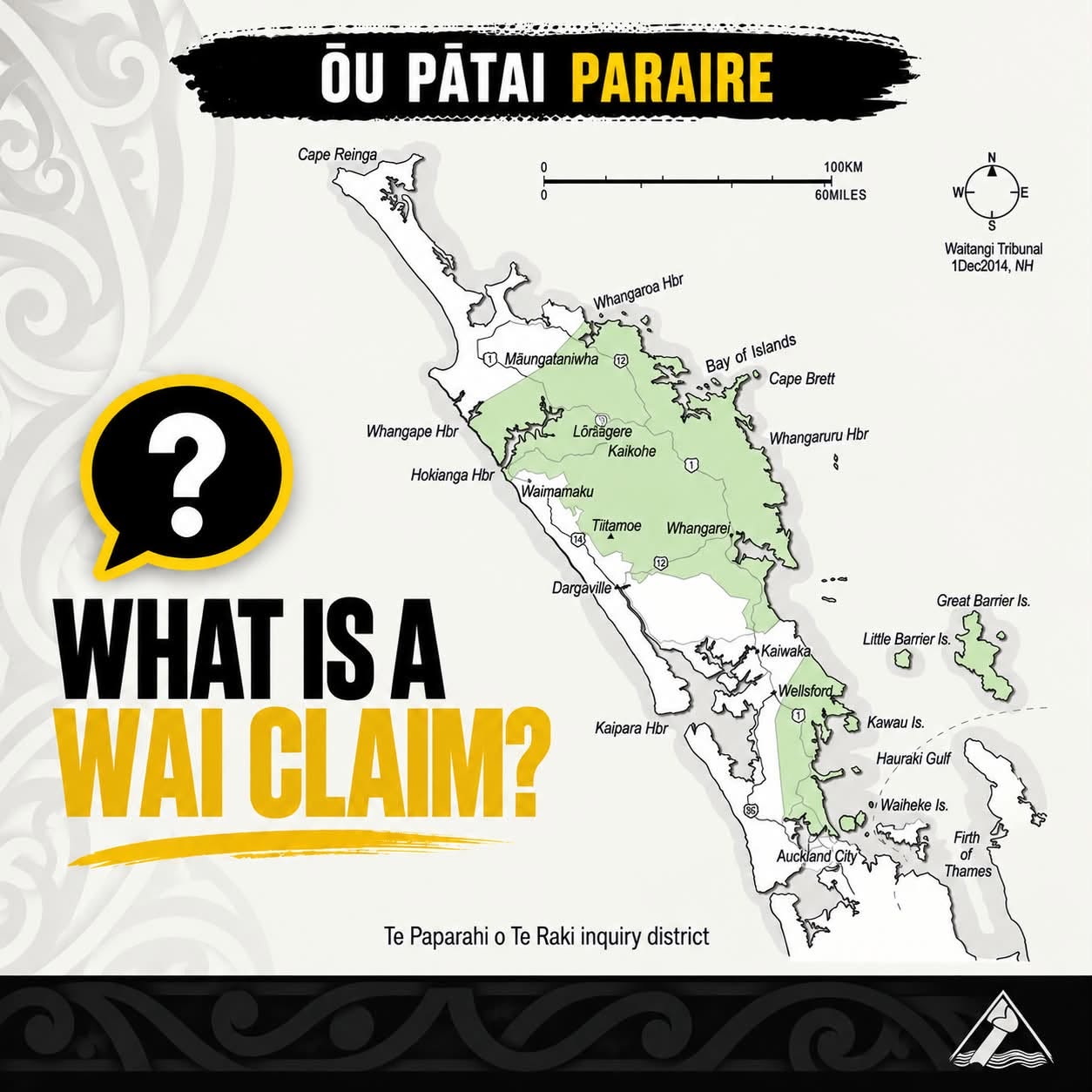
What is a Wai Claim?
We hear them often — Wai 58, Wai 230, Wai 919, Wai 1040…
But what actually is a Wai claim?
A Wai claim begins when Māori bring a claim to the Waitangi Tribunal alleging that an action, inaction, law or policy of the Crown has breached Te Tiriti o Waitangi and caused harm.
If the claim meets the requirements to be registered, the Waitangi Tribunal gives it a Wai number — “Wai” being short for Waitangi Tribunal claim.
So a Wai number is a reference number for a claim.
Read more…
Who Does Whangaroa Papa Hapū Represent?
Who does Whangaroa Papa Hapū (WPH) represent?
He pātai nui tēnei, and one worth slowing down.
From the beginning, much of WPH mahi has been about facilitating.
During the Waitangi Tribunal hearings process, that meant supporting claimants and hapū to bring forward their own histories, grievances and kōrero.
As we shared last week, when Whangaroa Papa Hapū was formed, the whakaaro was to create a space that considered all hapū of Whangaroa, not only those connected to particular claims.
Read more…
He aha te Whakapapa o Whangaroa Papa Hapū?
Our story begins in 1993.
That year, Te Taumata o Tangitū was established as a stand-alone body to support research associated with the Wai 58 claim and the Otangaroa forests.
Around the table were kaumātua, claimants, whānau and kaimahi whose names will be familiar to many across Whangaroa.
Hiwi Tauroa was the Wai 58 claimant, Te Uru Heta was chair and Nuki Aldridge was coordinator. Alongside them were Poihakena Kira, Leo Bowman, Paraire Eruera, Dan Pehi, Nancy Harris and Hariata Strongman.
Read more…